
Starting Your First Show Lamb Project: What Every Beginner Needs to Know | In partnership with

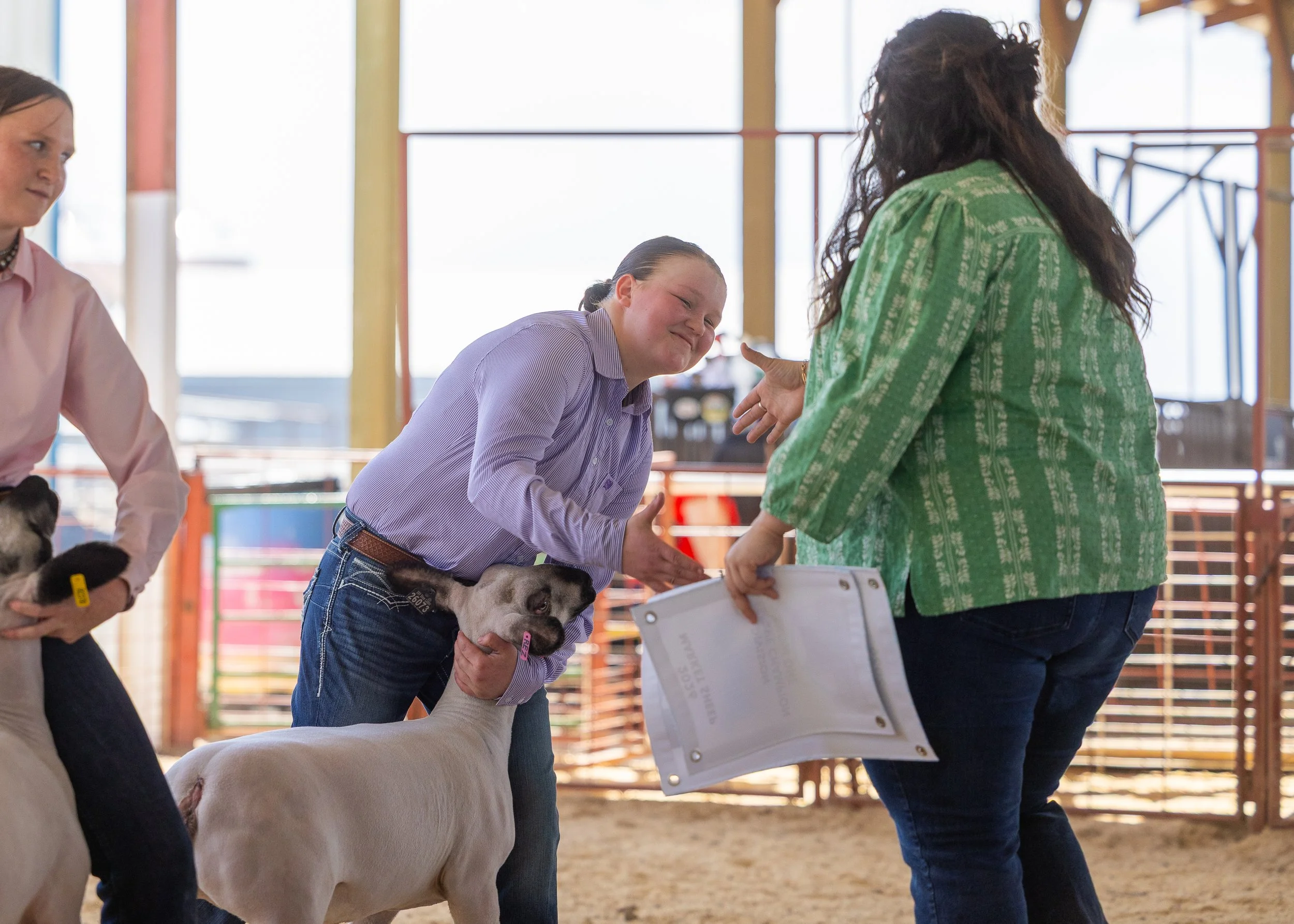
Starting a show lamb project for the first time can feel overwhelming. There is no shortage of opinions about what lamb to buy, what feed to use, which supplements to add, how often to work legs, how much to exercise, or how much money a family should spend. But according to livestock breeder and evaluator Adam Carrothers, a successful first-year project does not start with a feed bag, a set of clippers, or even the lamb itself.
It starts with understanding what you want out of the project.
Carrothers raises a flock of roughly 50 breeding sheep with a focus on producing lambs for 4-H and FFA exhibitors. His livestock background extends well beyond sheep. He has worked with commercial sow operations, horses, pigs, dogs, and other livestock, competed on the livestock judging team at Iowa State University, and coached successful 4-H and FFA judging teams. Much of his life has centered around livestock evaluation and the youth livestock industry.
Through those experiences, he has developed a straightforward philosophy for beginners: know your goals, understand your situation, find a complete animal, and do the simple things well.
Know What You Want Before You Start
Before a family ever begins shopping for a lamb, Carrothers believes they need to decide what kind of project they want.
There is a major difference between a child who simply wants to experience showing livestock and a family determined to compete at a high level. Neither approach is wrong, but they require very different levels of time, money, and effort.
A first-year exhibitor may want an easy-to-handle lamb, practice showmanship once or twice a week, take their animal to the county fair, and be completely satisfied with a participation ribbon. If that child finishes the summer smiling from ear to ear because they were able to take their sheep to the fair, Carrothers considers that a successful livestock project.
On the other end of the spectrum is the exhibitor who wants to compete at major shows, develop leg wool, practice showmanship constantly, carefully manage nutrition, and put considerably more time into fitting and daily care. Before asking a breeder, consultant, or mentor for advice, the family and the person helping them should understand which direction they are trying to go.
That does not mean a family needs to create an exact budget and map out every decision months in advance. Instead, Carrothers recommends having a general understanding of the goal and what the family is willing to do to reach it.
When approaching a breeder, a first-time family does not necessarily need to say, “We expect to win, and we want your best lamb.” A better approach might be explaining that this is their first project, giving the breeder a realistic budget, and explaining whether they mainly want to learn or whether they want to be competitive.
Most breeders can work with that information.
Build the Project Around Your Own Situation
One of the most important things Carrothers encourages families to do is evaluate their own strengths and weaknesses.
A child who lives on an acreage with parents who previously showed livestock begins with a different set of resources than a first-time exhibitor living in town who first has to find somewhere to keep a lamb. Neither situation means the project cannot succeed.
The important question is: What are you already capable of doing well, and what challenges will you need to overcome?
If geography is your weakness, for example, you may have to be more creative about finding livestock, feed, fitting help, or mentors. If your family has limited livestock experience but has access to a knowledgeable neighbor, that relationship may become one of your greatest resources. Carrothers believes families should stop trying to copy someone else's project exactly and instead build a program that fits their own circumstances.
That idea becomes especially important when it comes time to purchase livestock.
Do Not Let Geography Limit Your Search
It is common to see exhibitors post online that they are looking for a show animal but only want something within an hour or two of home. For families in major livestock-producing areas, that may work. For families in more remote areas, it can drastically limit their options.
Carrothers encourages exhibitors to think beyond location.
If a family is willing to spend a few hundred dollars on livestock transportation, they may be able to open their search to breeders across much of the country. In some situations, that transportation cost could allow them to find a better animal at a lower purchase price than they could find locally. That does mean a family may have to become comfortable evaluating sale pictures and videos rather than seeing every animal in person.
Carrothers believes both approaches can work.
Some buyers prefer traveling to breeders and evaluating every animal themselves. Others build a relationship with a breeder they trust. In some cases, experienced buyers simply tell a breeder what they need and allow that breeder to select the animal.
The important part is finding a method and a breeder you trust. For families living in areas where competitive livestock are difficult to find, limiting a search to a small geographic radius may unnecessarily limit the quality and number of animals available.
Showmanship Can Make or Break a Lamb Project
Of everything involved in a show lamb project, Carrothers places showmanship near the top of the list.
Unlike steers and market hogs, lambs are physically braced and positioned by the exhibitor. The judge's view of the animal can change dramatically based on how that exhibitor holds, braces, and presents it.
A phenomenal lamb can look average when presented poorly. An average lamb can look considerably better when presented correctly. That makes sheep and goats unique among livestock projects.
Carrothers does not believe there is one magic showmanship drill that fixes everything. Instead, exhibitors simply need to recognize how important practice is.
Practice with friends. Practice with neighbors. Attend a showmanship camp if one is available. Work with a trainer or consultant if it fits within your budget. If you do not have anyone nearby, use a large mirror in the barn so you can see what your lamb looks like while you are showing it.
Even calling an experienced exhibitor over FaceTime and having them watch you practice can help.
Any effort is better than none.
Study Great Showmen Before You Become One
One of Carrothers' simplest suggestions for beginners requires almost no money at all.
Go online and find recorded showmanship classes from major livestock shows such as the Arizona National, National Western Stock Show in Denver, Louisville, Kansas City, or other competitive events.
Instead of immediately watching the class from beginning to end, skip ahead to the judge's reasons.
Listen carefully.
What did the judge like about the top exhibitors? What did those exhibitors do particularly well? What mistakes did the judge notice?
Then rewind the video and watch the class again. Try to identify the exact things the judge talked about.
A family can sit together on a Saturday morning, put the video on a television, and turn the experience into a learning opportunity.
It costs almost nothing, but Carrothers believes an exhibitor who intentionally studies skilled showmen will enter the ring with an advantage over many other first-time exhibitors.
Match Your Showmanship Goals to Your Project
Not every child has to show a lamb at the highest possible level.
If a first-year exhibitor simply wants to try showing sheep and see whether they enjoy it, Carrothers is not opposed to that child using a halter in the ring.
At many competitive shows, the grand champion market lamb likely will not be shown on a halter. However, the point of every first-year project does not have to be winning a championship. That comes back to understanding your goals.
A project centered around learning and participation will look different than a project built around trying to win at a state or national-level show. The key is being realistic about what is required for the level you choose.
Leg Wool and Fitting: How Much Is Enough?
Fitting is another area where expectations should match the family's goals. If a child simply wants to participate and enjoy showing their lamb, they do not necessarily need an elaborate leg-wool routine.
If the goal is to become more competitive, however, leg wool becomes much more important. For a competitive project, Carrothers recommends working legs roughly every other day.
That can include rinsing or washing the legs, using conditioner, getting the wool completely clean, and then blowing it extremely dry. The lamb may also need leg wraps and a muzzle as part of the overall routine.
A beginner does not necessarily need expensive products. Even an inexpensive shampoo and a basic conditioner can be enough to begin building a routine.
The most important part is consistency.
Carrothers also cautions beginners about jumping into more advanced tools or products without understanding them. Melatonin, for example, can influence hair growth but comes with significantly more complexity. He recommends researching it thoroughly and talking with experienced exhibitors before adding it to a program.
For most beginners, there is plenty to learn before worrying about advanced strategies.
Your First Year, Hire Out the Hard Fitting Jobs
Carrothers' advice for first-time exhibitors is simple when it comes to major fitting jobs: do not be afraid to hire them out.
Purchasing sheep shears, clippers, fitting products, paint, and every other tool necessary can become expensive very quickly. Meanwhile, an experienced fitter may be able to perform the job substantially better for roughly the same amount of money a beginner would spend purchasing equipment.
That might include shearing the body before the show, blending legs, clipping, or performing finishing work.
If a family knows they plan to show sheep for the next ten years, then investing in equipment and learning those skills makes sense. But everything does not have to happen during the first project.
The first year might involve paying an experienced 4-H or FFA member to help. The second year could involve watching and learning. Later, the exhibitor can begin doing more of the fitting themselves.
Carrothers sees tremendous value in those relationships. Helping younger exhibitors also gives experienced youth another opportunity to practice their own skills.
The livestock industry benefits when experienced exhibitors are willing to teach beginners rather than expecting them to figure everything out alone.
Keep Feeding Simple
Nutrition is one of the easiest areas for new exhibitors to overcomplicate.
Carrothers' biggest advice is to resist that temptation. Start with a high-quality, fresh base feed.
Supplements can absolutely have a place in a livestock program, but they are not a cure-all. They are most useful when a strong project already exists and only needs a small adjustment.
They cannot compensate for poor genetics, stale feed, dirty water, inconsistent feeding, or basic management mistakes. Freshness matters more than many beginners realize.
A bag of feed may already be a couple of weeks old by the time it leaves the mill, reaches a dealer, and eventually gets purchased. Then it may sit in a barn for additional time. That makes storage and purchasing habits important.
Carrothers recommends feeding multiple times per day when appropriate, removing old or uneaten feed, and avoiding feed that has been sitting around for long periods.
Protein and fat percentages can help guide a program depending on the animal's age, maturity, muscle, and body condition. However, beginners do not necessarily need to analyze every ingredient on the tag or buy whatever feed happens to be the most popular online.
Find a quality feed that is available consistently, reasonably fresh, and appropriate for the lamb. Then build from there.
Sometimes the Simple Feeding Decision Is the Best One
Carrothers remembers helping a family who wanted to slightly increase the protein percentage of their lamb feed.
The feed they were currently using was fresh and accessible, but the exact higher-protein version they wanted was not available. Their alternatives were switching to a cheaper feed or driving farther for another option, both of which would likely mean using older feed.
Instead, Carrothers suggested purchasing several bags of their regular feed and several bags of a higher-protein feed and mixing the two. It was not something he necessarily recommended as a permanent feeding strategy, but in the short term he believed it was a better option than sacrificing freshness simply to hit a specific number on the feed tag.
The lesson was not that every exhibitor should start mixing feeds. The lesson was to think practically.
Do not become so focused on creating the “perfect” feed program that you overlook the quality of what is actually going into the feeder.
What If Good Feed Is Hard to Find?
For exhibitors in remote areas, simply finding a particular brand of feed may be difficult.
In some parts of the Midwest, a family may have several feed stores, co-ops, and private dealers within an hour. In other parts of the country, exhibitors may drive several hours for a particular product.
That is another situation where Carrothers recommends working with the resources available to you.
Talk to local exhibitors. Ask breeders. Find out whether there are private feed dealers nearby. If several families in the area use the same feed, consider ordering a pallet together and splitting it.
Again, everyone's situation will be different.
The goal is not to recreate someone else's program. The goal is to find the best practical solution for yours.
Do Not Forget About Water
One of the most overlooked pieces of livestock nutrition has nothing to do with feed.
It is water.
Carrothers regularly hears exhibitors describe lambs as picky eaters or complain that their animals have gone off feed, especially during hot weather. His first questions include: What does the water look like? How frequently are the buckets dumped? When were they last scrubbed?
His rule of thumb is simple: if he would not scoop a cup of water out of that bucket and drink it himself, it is not clean enough for his livestock. An exhibitor can spend tremendous amounts of money on feed and supplements and still limit the animal's performance if water intake is poor.
Water affects how effectively an animal can utilize the rest of the program.
Carrothers uses cattle as an example. Imagine a pasture of Hereford heifers with genetics capable of high conception rates. If those heifers do not have adequate clean water and are only consuming a portion of their water needs, their production potential will decline regardless of their genetics. The same principle applies to a show lamb.
Genetics establish potential, but management determines how much of that potential you can actually reach.
How Carrothers Manages Water at Home
In Carrothers' operation, every pen has at least two water containers.
He completes chores twice each day, roughly 12 hours apart.
His goal is that every 12 hours, every group of animals has at least one container of fresh, clean water with enough capacity to supply their needs for approximately 24 hours.
When he returns for the next chore, one bucket may still be relatively clean while the other has become dirtier or more heavily used. He dumps and scrubs the dirtiest container and replaces the water. That rotation helps ensure that the animals consistently have access to clean water.
It is not complicated, expensive, or flashy. But those basic management habits can have a significant impact on an animal's ability to perform.
Exercise Does Not Have to Be Complicated Either
Exercise is another subject that can quickly become intimidating for a first-time exhibitor. Some programs use tracks, dogs, walkers, treadmills, inclines, and advanced conditioning routines. Carrothers does not believe a beginner needs any of those things to have a successful first project.
A simple sprint can be effective.
For example, an exhibitor feeding twice per day might take their lamb roughly 100 yards away from the barn before one feeding and then encourage the lamb to sprint back toward the barn, using feed as motivation.
Other programs may use a circular track where lambs sprint a lap, walk a lap, and repeat the process. The idea is to introduce short bursts of exercise that help build muscle shape and, later in the project, manage excess fat.
Expensive equipment such as treadmills can be a tremendous tool in advanced programs, but they are not necessary for a beginner. Just because something can help does not mean every first-year exhibitor needs to buy it.
Wait Until the Lamb Actually Needs Exercise
Carrothers also cautions against beginning an intense exercise program too early. During the first portion of the lamb's development, nutrition and growth should do much of the work.
Exercise becomes more valuable later, when the exhibitor can evaluate the lamb and determine what actually needs to change. Perhaps the lamb has developed enough muscle but is beginning to carry too much fat. Maybe it needs slightly more shape through its leg. At that point, exercise can become another tool for making small adjustments.
The important word is small. Exercise is not going to transform an average lamb into an entirely different animal. It can help improve muscle definition, manage body condition, and change how an animal handles and presents, but exhibitors should maintain realistic expectations.
Genetics still determine the foundation.
The Best First-Year Programs Do the Basics Well
Across every part of a lamb project, Carrothers returns to the same idea.
Keep it simple. You do not need every supplement. You do not need the most expensive treadmill. You do not need to own every set of clippers during your first year. You do not have to drive across the country to personally inspect every lamb.
And you do not have to structure your project exactly the way another exhibitor does.
Instead, understand your goals. Find mentors whose advice matches those goals. Buy the most complete lamb you can reasonably afford. Study showmanship. Practice consistently. Feed fresh, quality feed. Keep clean water in front of your animals. Learn fitting skills gradually. Add exercise when the animal actually needs it.
Most importantly, understand the difference between participating and competing at the highest level. Both can create successful livestock projects.
A child taking an off-breed lamb to the county fair and smiling all day can have just as meaningful of an experience as an exhibitor pursuing a championship banner. The work, investment, and expectations will simply look different.
For Carrothers, the biggest thing a first-time lamb exhibitor should understand before ever walking into the ring is how much the exhibitor themselves influences what the judge sees.
Sheep are unique.
How the lamb stands, braces, moves, and presents itself depends heavily on the person holding it. That means one of the greatest investments a beginner can make is not necessarily another product.
Start With a Complete Lamb
When a first-time exhibitor begins evaluating lambs, Carrothers encourages them to look for something complete and relatively free of major faults. For beginners, that is often more valuable than chasing one extreme feature. He breaks livestock evaluation into three major areas: power, eye appeal, and structure.
From a power standpoint, he wants an animal that has skeletal width. Ideally, the lamb should be wide at the ground, wide through its chest floor, and maintain width through the top of its body. A lamb whose legs nearly rub together when it moves is likely too narrow.
Rib shape matters as well. Carrothers prefers an animal with curvature to its rib rather than something extremely flat sided.
Another visual Carrothers uses is to imagine placing a marble on the lamb's back. Ideally, the marble would stay in place rather than immediately rolling down one side. A desirable lamb should have a wide, relatively flat top rather than an extremely narrow, A shaped back.
From an eye appeal standpoint, one characteristic he pays particular attention to is depth of chest. He believes sheep that are cleaner and shallower through their chest floor tend to have a more desirable show-ring appearance.
He compares the concept to the difference between commercial cattle and show cattle. A deeper, heavier front end may be acceptable in some commercial situations, but in the show ring, an animal that is cleaner and more attractive through its front end often stands out.
Again, the goal is not to select an animal based entirely on one characteristic. Instead, these traits give beginners a way to begin recognizing what separates one lamb from another.
Be Careful When Buying a “Green” Lamb
Another phrase beginners will hear frequently is that a lamb is “green.” Carrothers warns that the word can mean two very different things.
Sometimes a green lamb is simply immature and needs feed and time before developing into a powerful animal. Other times, calling an animal green can become a convenient way of explaining away an animal that simply lacks power.
If a breeder tells you a lamb is green, Carrothers recommends looking for indicators that suggest the animal has the potential to develop. Look for signs of masculinity and natural power. Large feet, stout legs, larger eye sockets, and additional bone can all indicate that the animal has the framework to become more powerful as it matures.
If the lamb is narrow, fine-boned, small-footed, and delicate everywhere, simply feeding it longer may not transform it into a powerful show lamb. The animal does not have to look completely mature when you buy it, but there should be something about its design that gives you confidence that the power can come later.
Structure Matters More Than Beginners Realize
Structure is another area Carrothers believes deserves far more attention in sheep. Starting at the front leg, he prefers to see some backward slope and angle through the knee rather than an extremely straight front leg.
The difference may be difficult for a first-time exhibitor to recognize initially. However, after seeing a truly good front leg, the difference becomes much easier to understand.
The rear leg gives exhibitors several additional indicators to evaluate. Length of hip, length of stride, and angle to the hock are closely related. Lambs that are longer and more appropriately angled through this part of their skeleton tend to move with a smoother, more flexible stride.
Carrothers describes desirable movement as almost “cat-like.”
A lamb that is shorter and straighter through its rear skeleton is more likely to have restricted movement. Sound, flexible sheep are not always easy to find, which is one reason Carrothers believes they stand out so dramatically when you see one.
Exercise Does Not Have to Be Complicated Either
Exercise is another subject that can quickly become intimidating for a first-time exhibitor. Some programs use tracks, dogs, walkers, treadmills, inclines, and advanced conditioning routines. Carrothers does not believe a beginner needs any of those things to have a successful first project.
A simple sprint can be effective.
For example, an exhibitor feeding twice per day might take their lamb roughly 100 yards away from the barn before one feeding and then encourage the lamb to sprint back toward the barn, using feed as motivation.
Other programs may use a circular track where lambs sprint a lap, walk a lap, and repeat the process. The idea is to introduce short bursts of exercise that help build muscle shape and, later in the project, manage excess fat.
Expensive equipment such as treadmills can be a tremendous tool in advanced programs, but they are not necessary for a beginner. Just because something can help does not mean every first-year exhibitor needs to buy it.
Wait Until the Lamb Actually Needs Exercise
Carrothers also cautions against beginning an intense exercise program too early. During the first portion of the lamb's development, nutrition and growth should do much of the work.
Exercise becomes more valuable later, when the exhibitor can evaluate the lamb and determine what actually needs to change. Perhaps the lamb has developed enough muscle but is beginning to carry too much fat. Maybe it needs slightly more shape through its leg. At that point, exercise can become another tool for making small adjustments.
The important word is small. Exercise is not going to transform an average lamb into an entirely different animal. It can help improve muscle definition, manage body condition, and change how an animal handles and presents, but exhibitors should maintain realistic expectations.
Genetics still determine the foundation.
The Best First-Year Programs Do the Basics Well
Across every part of a lamb project, Carrothers returns to the same idea.
Keep it simple. You do not need every supplement. You do not need the most expensive treadmill. You do not need to own every set of clippers during your first year. You do not have to drive across the country to personally inspect every lamb.
And you do not have to structure your project exactly the way another exhibitor does.
Instead, understand your goals. Find mentors whose advice matches those goals. Buy the most complete lamb you can reasonably afford. Study showmanship. Practice consistently. Feed fresh, quality feed. Keep clean water in front of your animals. Learn fitting skills gradually. Add exercise when the animal actually needs it.
Most importantly, understand the difference between participating and competing at the highest level. Both can create successful livestock projects.
A child taking an off-breed lamb to the county fair and smiling all day can have just as meaningful of an experience as an exhibitor pursuing a championship banner. The work, investment, and expectations will simply look different.
For Carrothers, the biggest thing a first-time lamb exhibitor should understand before ever walking into the ring is how much the exhibitor themselves influences what the judge sees.
Sheep are unique.
How the lamb stands, braces, moves, and presents itself depends heavily on the person holding it. That means one of the greatest investments a beginner can make is not necessarily another product.
It is time.
Time studying, time practicing, time asking questions, time caring for the animal, and time learning what works for your own project.
There may not be one perfect formula for a first show lamb project. But if exhibitors can learn to evaluate their own situation, master the basics, and build the project around realistic goals, they are already several steps closer to success before they ever enter the ring.
*This article was developed in partnership with Carrothers Clublambs and Adam Carrothers, a livestock breeder and evaluator focused on producing show lambs for 4-H and FFA exhibitors and supporting the next generation of livestock youth.*