
Show Lamb FAQ
How do I get my show lamb to brace if it won’t push back?
Backing Off a Sheep Stand
One method that has consistently worked for me when teaching a lamb to brace is backing them off a sheep stand. Start by putting your lamb on the stand and positioning yourself near the front of the lamb. If your stand has a removable headpiece, removing it can give you more room to work. Set your lamb’s feet and get into the same “power stance” you would use in the show ring. Always practice the way you plan to show.
Once you’re in position, begin applying pressure into the lamb with your body. A lamb that is not yet brace-broke will often respond by backing away from the pressure. Continue working the lamb backward toward the edge of the stand. The goal is for the lamb to learn that instead of continuing to back away from pressure, it should push back into you. Continue practicing consistently until the lamb begins responding to your pressure by pushing back and holding a brace.
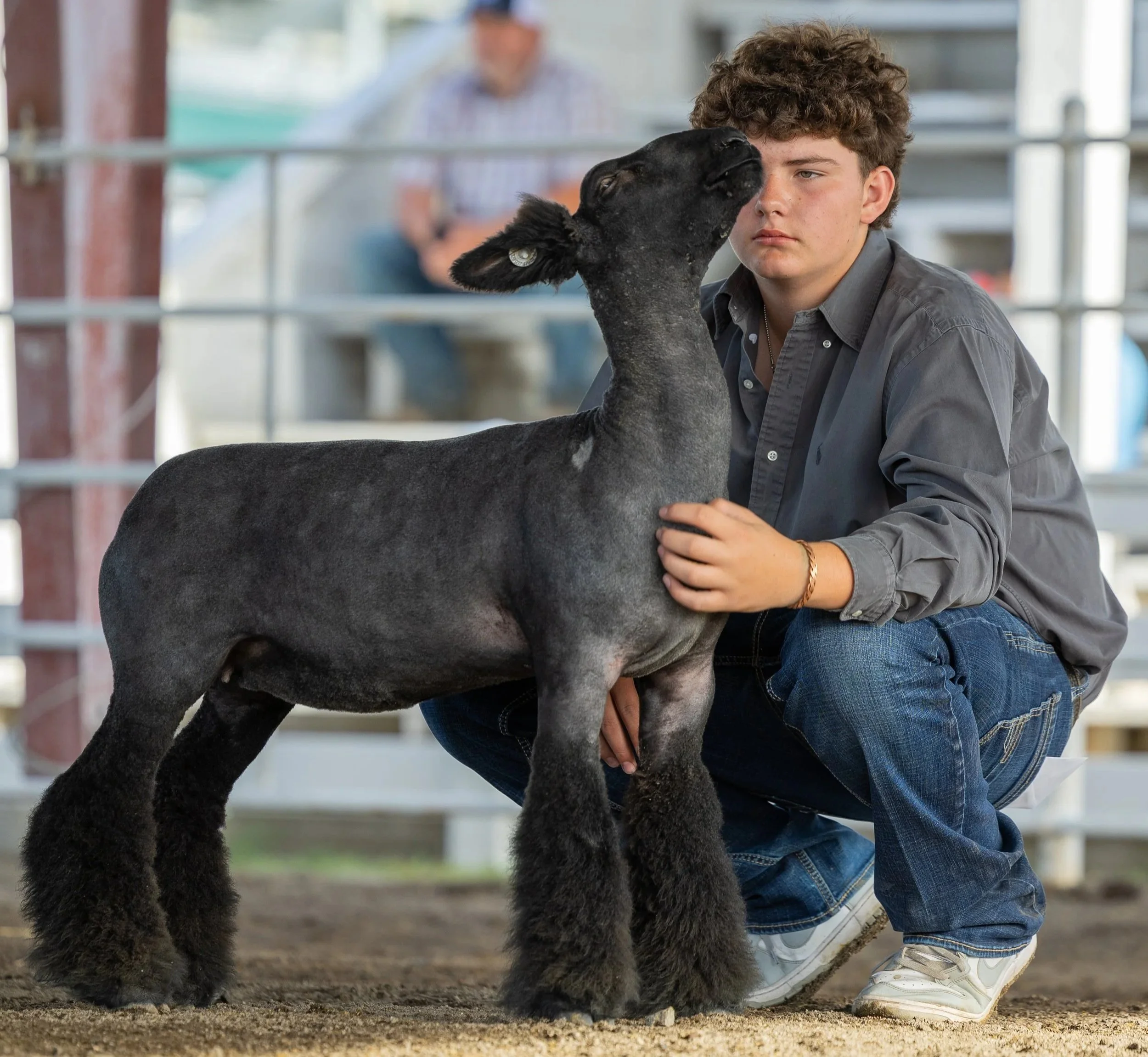
Finding Your Power Stance *Power Stance Pictured
Your “power stance” is the position you use while bracing your lamb in the show ring. One easy way to think about it is “heel to toe and knee to shoulder,” creating an L-shaped stance with your feet.
A good stance can make bracing more comfortable for the showman while also helping you maintain control of your lamb. This can be especially helpful for taller showmen who may otherwise put unnecessary strain on their knees and back. Body position matters, too. Keep your chest up rather than hunching over your lamb, watch the judge, stay aware of what is happening around you in the class, and maintain control of your lamb. Good showmanship isn’t just about getting your lamb to brace. It’s about learning how to position yourself and your animal so you can present your lamb to the best of your ability.
Written by Josi Mullen
For Bracing
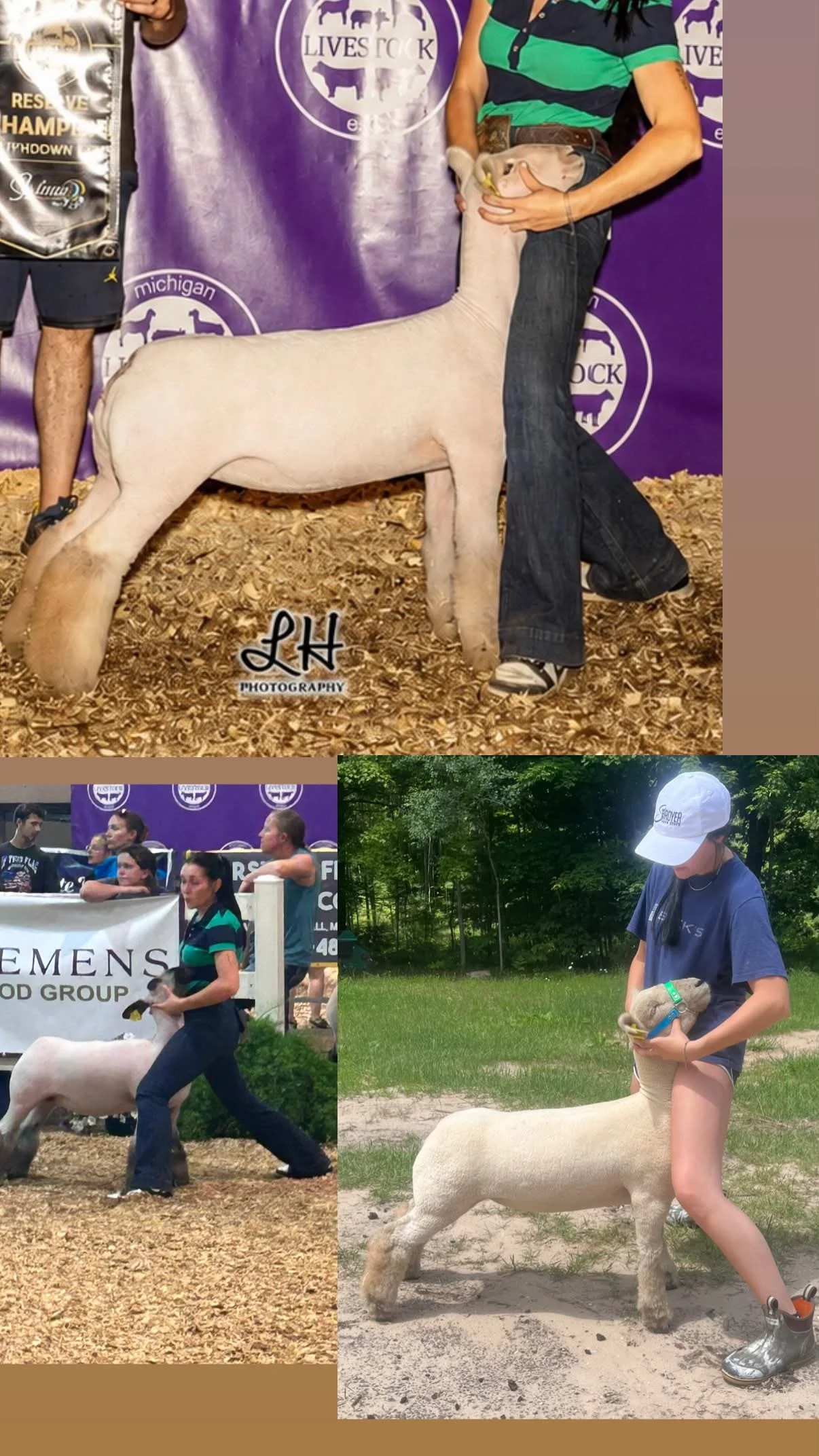
One thing to try is practicing with your lamb on a sheep stand. Set the stand up like you normally would, but remove the headpiece and practice setting up and bracing your lamb while it is on top of the stand. Have someone nearby to help while you practice. Being on the elevated surface may encourage the lamb to push forward into you rather than continually backing away from the pressure. You can also try putting the stand at a slight incline by raising the front legs while leaving the back legs lower. With the headpiece secured and the lamb properly positioned on the stand, the incline can encourage the lamb to naturally shift its weight and push forward, helping it learn the pressure you are looking for when bracing.
Written by Hannah Loforti
Another method for teaching a lamb to brace is working with a raised surface, such as a sheep stand or the edge of a trailer. The idea is to carefully allow the lamb to recognize that there is an edge behind it while keeping it supported and preventing its legs from reaching the ground. This can encourage the lamb to respond by pushing forward into the showman. Some lambs may also begin bracing more naturally with consistent practice. Try getting into your normal bracing position, applying gentle pressure against the lamb, and slowly increasing that pressure until the lamb begins to push back. When the lamb responds correctly, release some of the pressure so it begins to associate pushing forward with what you are asking. Consistency and repetition can help the lamb gradually understand how to respond when it is time to brace.
Written by Braden Kooiman
For bracing, one of my biggest recommendations is to use the time your lamb is already on the stand to practice. Before taking him off for the day, get into your normal showmanship position and set him up while he is still on the stand. Being near the edge can encourage him to push forward into you. If he doesn’t immediately push back, carefully move him backward until he recognizes that he isn’t standing on flat ground, then encourage him to push forward. You can also practice this on another safe, raised surface, but consistency is key. Some lambs simply take more work to learn how to brace, and you may have to be a more active showman in the ring to present them correctly. You can encourage forward movement from the hind end before moving into your bracing position. Another training option is working with a properly secured bungee system that helps keep the lamb’s head elevated and creates a controlled environment for practicing while also helping build neck strength. Always make sure any elevated surface or training setup is secure and that the lamb cannot fall or become tangled.
Written by Brooklyn Wells
Why does my show lamb keep choking while eating?
Slowing Down a Lamb That Eats Too Fast
When having an animal that chokes easy on feed most of the time your first thought is to feed wet so what their eating is already expanded and they can’t choke as easy WRONG! They can still choke just as easily on wet feed most of the time their eating way to fast this was the case with a wether I had. After rushing him to the vet multiple times to have him tubed we were all stumped on what to do with him, we ended up putting to giant rocks in his feeder to slow him down. This way he had to work for his food well still getting everything we needed him to eat!
You don’t want small rocks that they could possibly eat, try to find rocks the size of your fist or the size of a softball to slow them down. It may take them longer to eat but it’s keeping them safe and alive in the end! If you ever end up dealing with the lamb that is choking and you can’t get to the vet here are some steps to follow!!
Take away feed and water.
Don’t freak out!
Massage the neck and throat area.
Try to push up the feed with your hand starting at the base of the chest pushing all the way up to the mouth. This may take a few tries considering how much they have blocked up.
If this doesn’t work try to have someone on stand by that knows how to tube a lamb. If doing this inexperienced can hurt the lamb and you can possibly damage the throat
Written by Josi Mullen
For feeding, I would recommend splitting the lamb’s feed into multiple smaller meals throughout the day. Sometimes lambs choke because they get overly hungry and then try to eat their feed too quickly. If you aren’t already feeding hay, you could also try giving the lamb a little bit of hay before its grain. This may help slow the lamb down and keep it from rushing through its feed as quickly.
Written by Hannah Loforti
As far as choking goes, adding water to the feed can sometimes make the problem worse because the feed can clump together and become harder to swallow. Instead, try feeding the lamb in smaller increments, giving it a little bit at a time until it has eaten its full feeding. Putting hay underneath the grain or mixing hay in with the feed can also help slow the lamb down while it eats.
Written by Braden Kooiman
Although I haven’t personally had this issue with one of my own lambs, I’ve seen several people in my barn deal with it. One solution is adding water to the feed, but I’ve noticed that some lambs don’t like the texture when their feed gets too wet, similar to how people can be picky about certain food textures. Another option is placing a large rock or ball in the feeder to help slow the lamb down, similar to a slow-feeder bowl for dogs. Having an obstacle in the feeder forces the lamb to work around it instead of eating its feed as quickly. I’ve also known people who “slow feed” their lambs by giving them a little bit of their feed at a time until they’ve finished their full feeding. A lot of the time, choking happens because the animal is simply eating way too fast, so finding a way to slow them down can make a big difference.
Written by Alice Woolery
For feeding, I would make sure the lamb’s feed is very wet—not necessarily soft and soaked in, but almost a soup-like consistency. I would also find a way to slow down how quickly the lamb is eating, since eating too fast is likely what is causing the choking. One option is using a bucket attachment that creates obstacles in the feeder and forces the lamb to slow down while eating. Eventually, as the lamb learns to eat more slowly, you may be able to remove the attachment.
Written by Brooklyn Wells