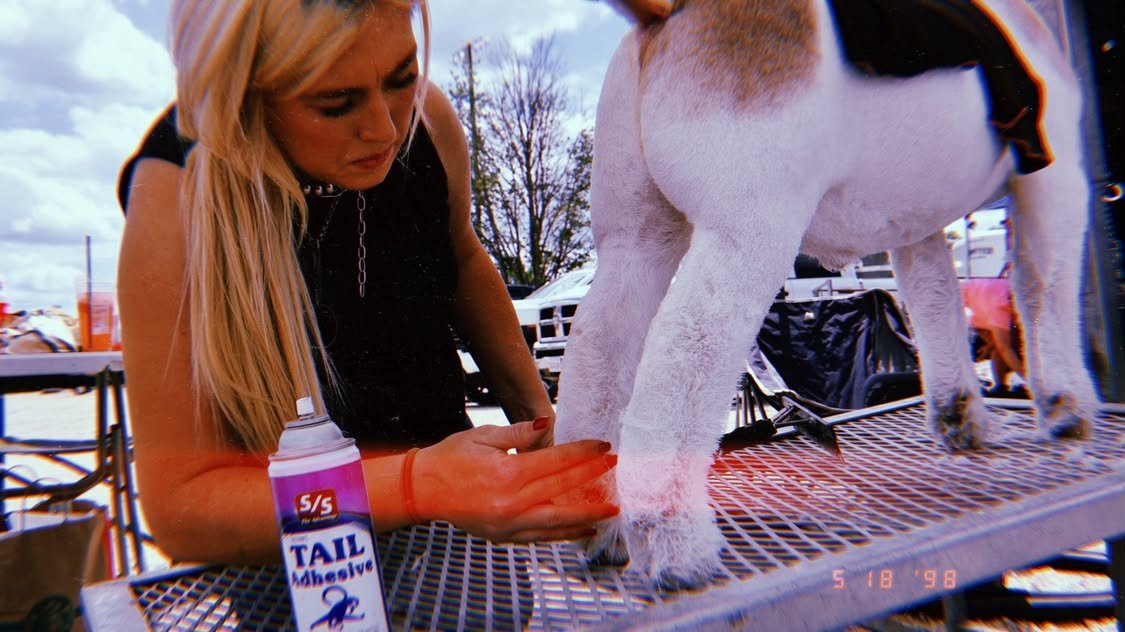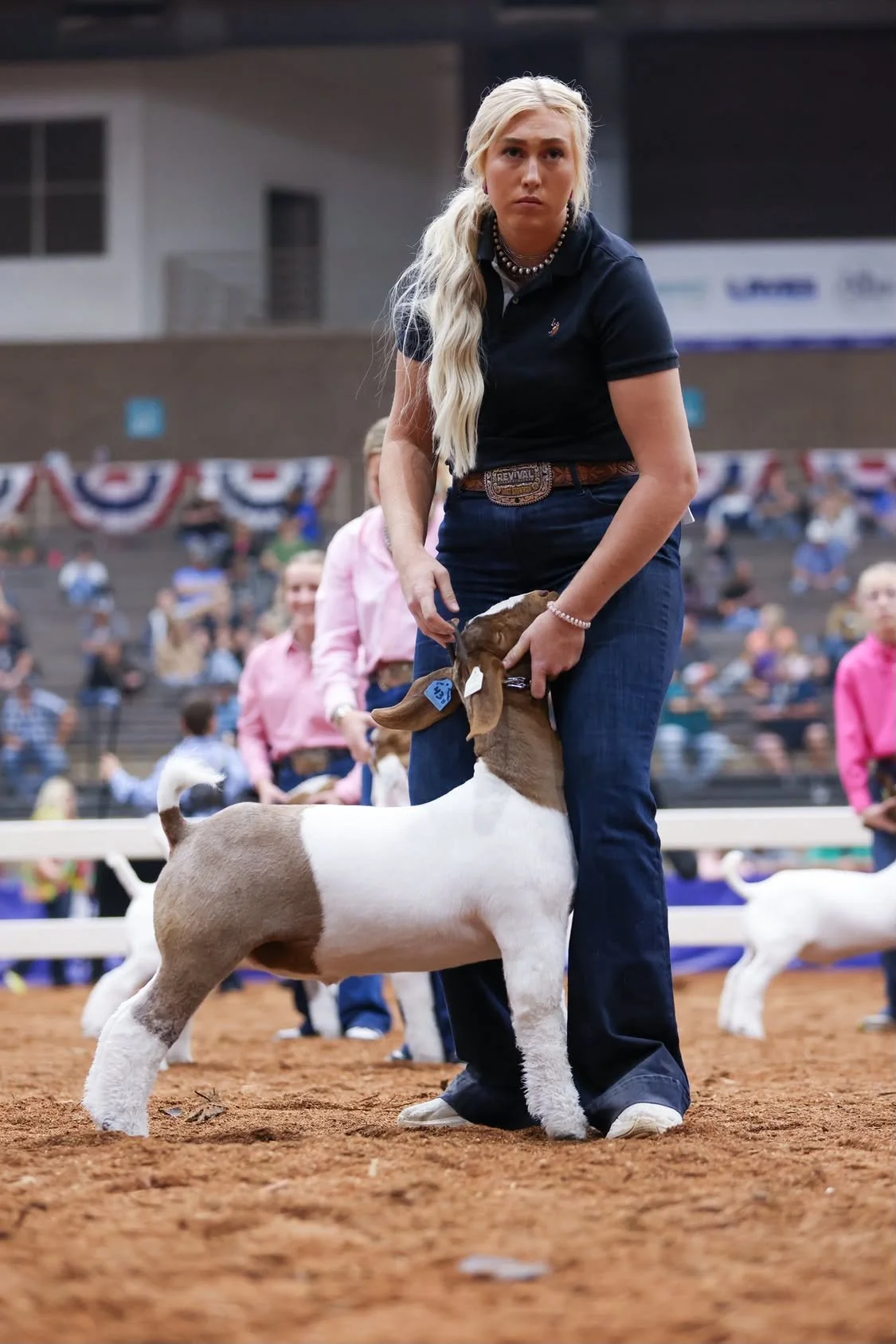
Bringing Home Your First Show Goat: What You Need to Know With Echo Bartels
Bringing home your first show goat is exciting, but it can also feel overwhelming. What should you have ready? When should you start working with them? How do you get them to walk? And how soon should you start practicing showmanship?
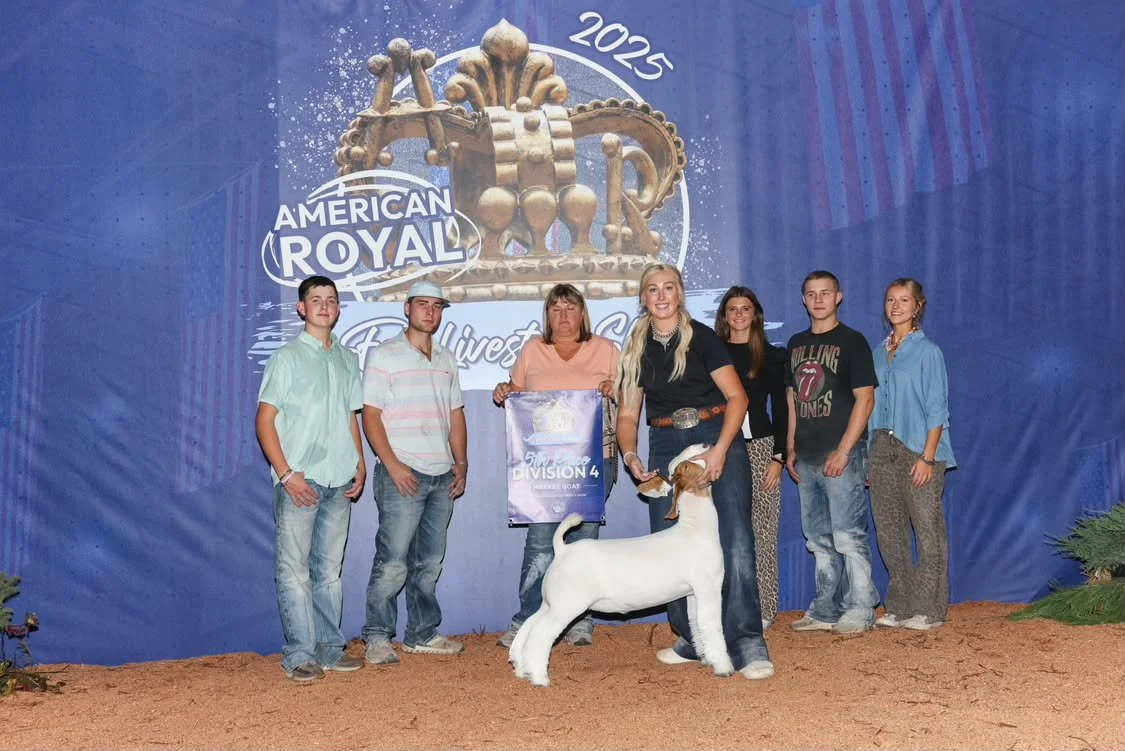
Echo Bartels, a 21-year-old livestock exhibitor from Loma, Colorado, has shown sheep, goats, cattle, and pigs across the country. Through years of experience in the show industry, she has learned that what happens during those first few days and weeks can make a big difference later in the show season.
Before Your Goat Comes Home
Before you ever unload your new goat, make sure you have a safe place ready for them.
Start with a clean pen with fresh bedding and fresh water. You should also have your feed and hay ready before the goat arrives so you aren't scrambling to find everything afterward.
The environment matters, too. During the winter, your goat needs a safe place protected from harsh weather. During the summer, focus on providing a cool, comfortable area where the goat can get out of the heat.
Most importantly, make sure the pen is secure and free of anything that could hurt the goat.
Echo's family generally uses relatively small pens, often around 4 feet by 4 feet. A young goat doesn't necessarily need a huge pen. In fact, an oversized pen can make catching and handling a young, nervous goat much more difficult.
The goal is to provide enough room for the goat to move around comfortably while still making it easy for you to safely catch and work with them.
The First Day Home
When your goat first arrives, don't feel like you immediately need to start training.
Traveling, changing barns, meeting new people, eating different feed, and adjusting to a completely new environment can all be stressful.
Echo's family gives new goats time to settle into their pens with fresh water and a comfortable environment. Depending on what time they arrive, they may offer some feed and then allow the goat to relax.
Some exhibitors also use probiotics during the transition. If you have questions about probiotics, medications, vaccinations, or other health products when bringing a goat home, talk with your veterinarian about what is appropriate for your animal.
The first goal is simple: let your goat settle in and get comfortable.
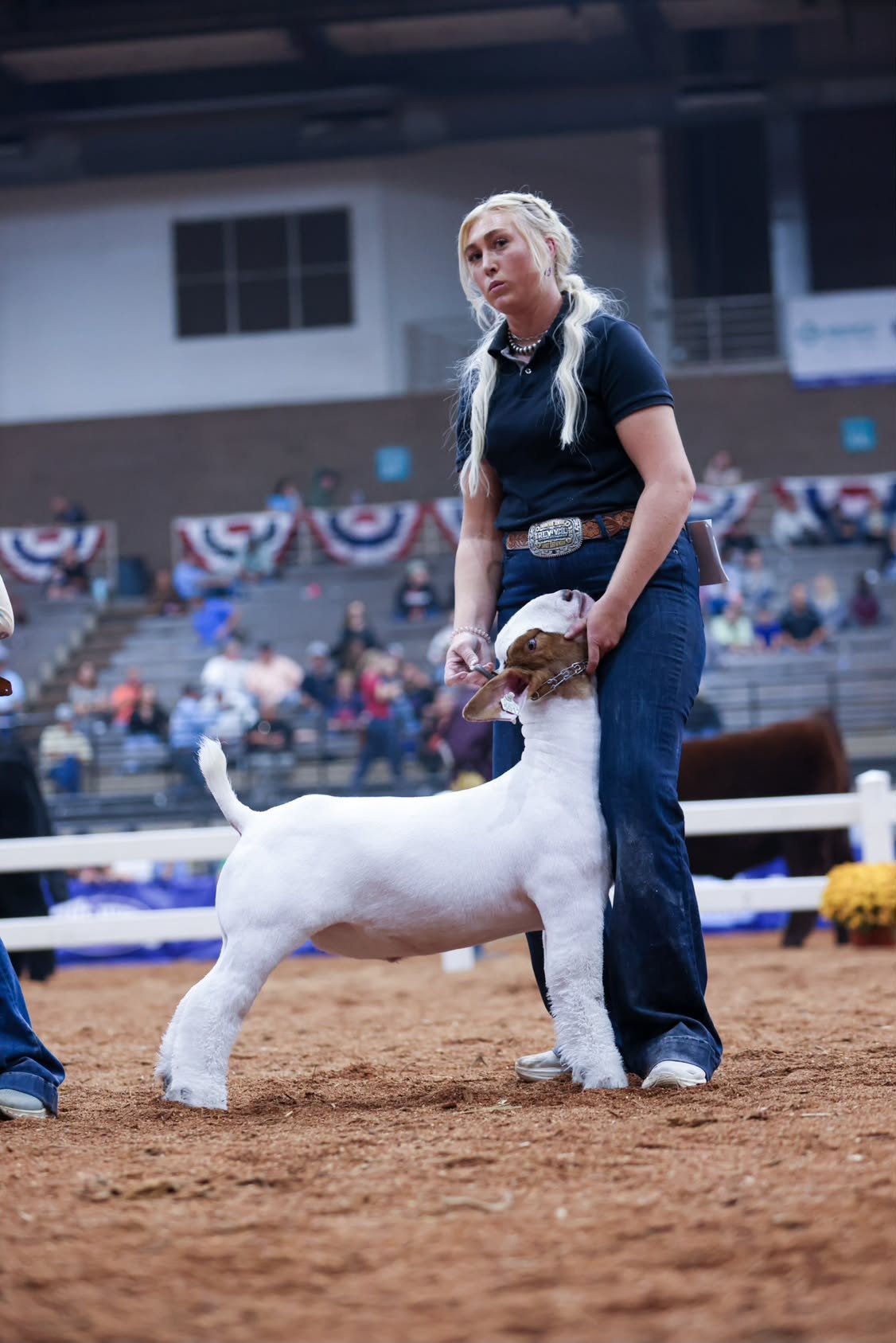
Don't Just Drag Your Goat
One of the biggest mistakes Echo sees beginners make is putting a halter or chain on a goat and immediately trying to drag it around.
That can turn the goat's first experience with being led into a negative one. Instead, focus on teaching the goat what you want.
Give the goat time to become comfortable with you before expecting it to walk perfectly. Echo likes to stay behind the goat's shoulder and gently encourage it forward rather than standing in front and pulling. Goats naturally move with other animals, so you can use that instinct to your advantage.
If you have another goat that already walks well, try walking the experienced goat in front while the younger goat follows behind. Sometimes having a buddy makes everything easier.
Getting Your Goat Used to a Halter or Chain
During the second week, Echo begins getting goats more comfortable with being restrained.
One method she uses is safely securing the goat in its pen for short, supervised periods so it can begin learning to respond to pressure rather than immediately fighting against it.
This process should always be done carefully. Never leave a restrained animal unattended, and make sure anything the goat is attached to is secure and safe. When you begin walking, don't expect perfection.
Stay patient, encourage the goat forward, and try to make walking feel like the goat's decision rather than a constant battle between you and the animal.
When Should You Start Practicing Showmanship?
You don't have to wait weeks to begin teaching the basics.
Echo usually starts around the third day after a goat arrives, depending on how comfortable the animal is. At first, this doesn't mean having a full showmanship practice.
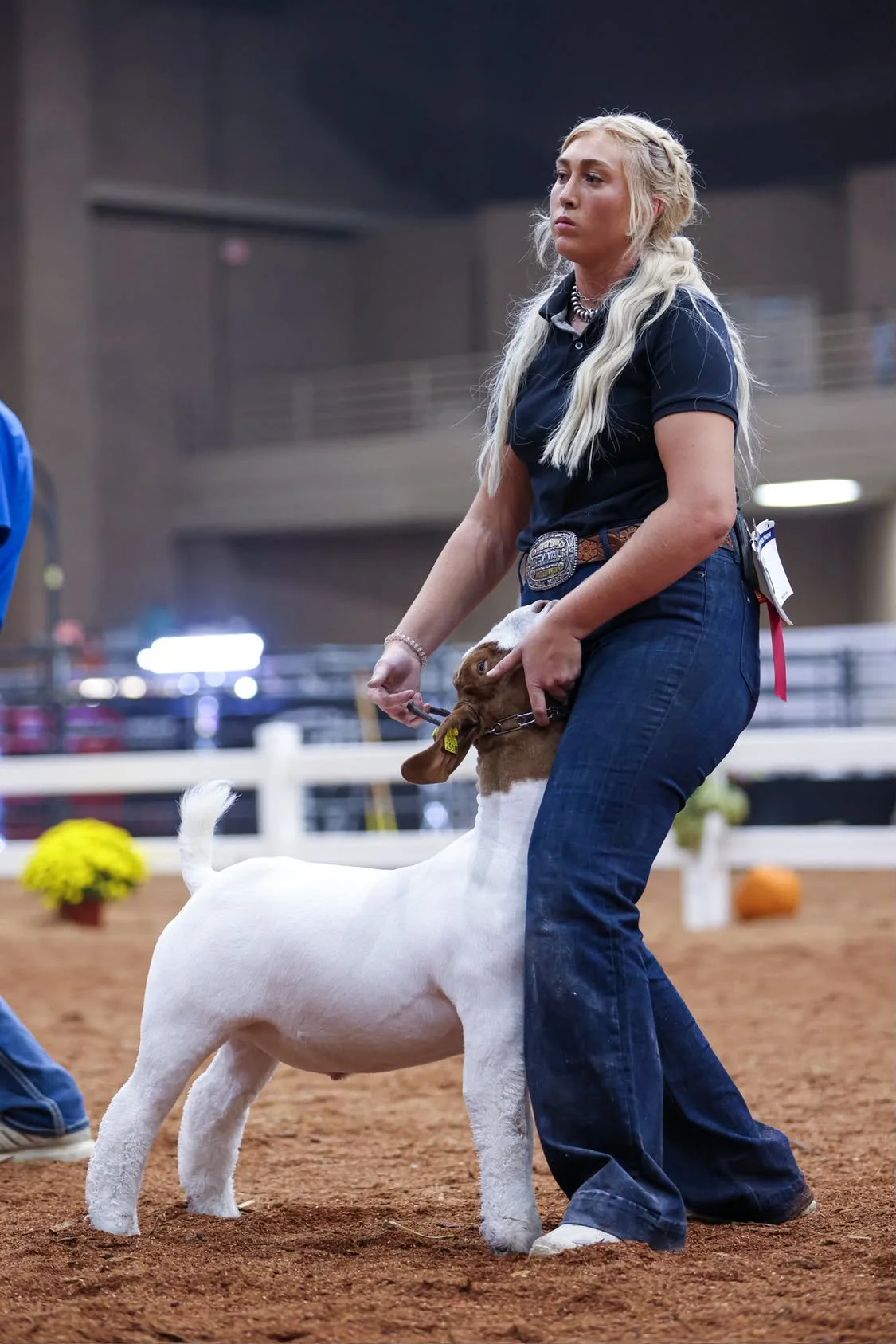
She simply goes into the pen and works on getting the goat to stand correctly. She sets its feet square and teaches it to stand calmly with its head up.
Once the goat understands how to stand, she begins introducing bracing.
When Should You Start Exercising Your Goat?
There isn't one perfect answer.
Every goat is different.
Echo bases her exercise program on the goat's size, age, body condition, and needs. Some goats may begin certain forms of exercise relatively early, while others may not need a structured conditioning program for another 60 to 90 days.
Her family uses several conditioning methods, including walking, a track, and a treadmill.
A track is a fenced pathway where the goat can be encouraged to run for conditioning. Echo likes this method because it helps keep the goats athletic and lean.
However, more exercise isn't automatically better.
Young goats are still developing, and Echo is especially cautious about putting smaller goats on a treadmill because of the stress it can place on their bodies and joints.
If you're a beginner, don't feel like you need an elaborate exercise program immediately. Start with regular handling and walking, learn to evaluate your goat's condition, and work with an experienced breeder, advisor, or veterinarian when developing a more intense conditioning program.
Getting Ready for Your First Show
If you're preparing for your very first show, Echo believes one thing should be near the top of your priority list:
Get your goat broke to show.
Your goat doesn't have to be perfect.
But it should be able to walk with you, keep its head up, stand reasonably well, and begin to brace.
Going into the ring with a goat that refuses to walk can be frustrating for both the exhibitor and the animal.
Spend time at home practicing the basics so that when you arrive at the show, you can focus on learning and having fun instead of fighting your goat around the ring.
What If You're Falling Behind?
Maybe the show is getting closer and you suddenly realize you're not where you wanted to be.
First, figure out where you're behind.
Is your goat too thin?
Is it carrying too much condition?
Does it refuse to walk?
Does it need more showmanship practice?
Have you fallen behind on hide and hair care?
Once you've identified the problem, you can focus your attention there instead of trying to fix everything at once.
Echo believes body condition is especially important. If a goat is significantly too thin or too heavy, that may need to become a priority while you continue working on the other pieces.
The easiest solution, though, is consistency from the beginning.
A little work every day is much easier than trying to make up weeks of missed work right before a show.
Want to hear it all?
Listen to the full First Time In The Ring episode with Echo Bartels for more advice on raising and showing your first Goat!

How Can You Tell if Your Goat Is Stressed?
Every goat handles stress differently, so learning what is normal for your individual animal is important.
A stressed goat may stand in the corner with its head down or consistently keep its tail down. You may also notice that the goat doesn't want to eat or drink.
Pay particularly close attention to water consumption. If your goat isn't drinking, something may be wrong and it shouldn't be ignored.
When a goat seems stressed, sometimes one of the best things you can do is make the environment comfortable and give the animal some space.
Provide fresh water and hay, keep the area calm, and avoid overwhelming the goat with constant handling. If your goat isn't eating or drinking, appears sick, or you're concerned about its health, contact a veterinarian.
How Much Should You Handle Your Goat During the First Week?
This depends heavily on the goat.
If you bring home a goat that is extremely nervous or difficult to handle, Echo recommends giving it a little more time to settle down before asking too much from it.
A calmer goat may be ready for gentle handling almost immediately.
Within the first few days, Echo begins spending time in the pen with her goats. She may practice setting their feet and getting them comfortable standing correctly, but that doesn't mean immediately taking them on long walks.
The important part is simply spending time with them.
Sit with them. Touch them. Let them become familiar with you.
After the first couple of days, you can gradually begin asking for more.
What Does It Mean to Brace a Goat?
You may hear experienced exhibitors talk about getting a goat to "drive" or "push."
They're talking about bracing.
When bracing, the exhibitor positions themselves in front of the goat and asks the goat to push forward into them. Echo describes using her leg or knee against the goat's chest and encouraging it to push forward.
Don't expect a beginner goat to immediately understand what you're asking. Like walking, setting up, and everything else in showmanship, bracing is something the goat has to learn.
Start small and build from there.
Building a Daily Routine
Once a goat has settled in, consistency becomes extremely important.
Echo's family's routine with competitive show goats can be intensive. During the summer, they may start early in the morning while temperatures are still cool and walk their goats while practicing showmanship along the way.
Their goats may also have an exercise session depending on the animal and where it is in its feeding and conditioning program.
After exercise, the goats are allowed to cool down before being fed.
Hide and hair care are another part of their routine. Their goats are rinsed, conditioned, blown out, and worked regularly. Echo even practices showmanship while the goats are in the wash rack.
But the goats don't spend the entire day working. Echo intentionally gives them several hours of quiet time when they can sleep, eat some hay, and simply relax in their pens. When temperatures allow, the goats may also spend some time together where they can move around and socialize.
The important lesson for a beginner isn't that you need to copy an experienced show barn's schedule exactly. It's that good show animals are built through consistent daily care.
Feeding, watering, practicing showmanship, caring for their skin and hair, exercising appropriately, and allowing time to rest all become part of the routine.
Don't Overlook Shearing
One mistake Echo sees frequently at shows is goats being sheared too closely.
The goal isn't simply to remove as much hair as possible. You want your goat to walk into the ring looking clean, smooth, and put together.
Echo prefers leaving a little more hair by using an appropriate blade, guard, or cover coat setup rather than taking the hair extremely short with a surgical blade.
Exactly how you shear will depend on your goat, the type of show you're attending, and the rules of that show. If you've never sheared a goat before, ask an experienced exhibitor, breeder, or advisor to show you how before doing it on your own.
Spend Time in the Barn
Looking back at when she started showing goats, Echo says there are plenty of little things she wishes she had known.
She wishes someone had taught her more about clipping. She wishes she had understood how important it was to get her goats properly broke.
But her biggest piece of advice has very little to do with winning.
Slow down and enjoy it.
Showing livestock takes an incredible amount of time and work. There will be early mornings, frustrating practices, goats that don't cooperate, and shows that don't go the way you hoped.
But eventually, your time as a junior exhibitor ends.
So spend time in the barn.
Learn as much as you can. Enjoy your animals. Ask questions. Work hard.
And while you're doing it, remember Echo's final advice:
Be nice. Be kind. Be a good human. Stay humble, and work hard. You never know what somebody else is going through.