What to Do When You First Bring Your Lamb Home: With Austin Evans
Bringing home your first show lamb is exciting, but it can also feel overwhelming. There are feed choices, supplements, equipment, health concerns, and a hundred different opinions from people at the barn.
In a recent First Time In The Ring podcast episode, livestock judging coach and longtime sheep exhibitor Austin Evans shared his advice for helping a new lamb get off to the best possible start.
Give Your Lamb Time to Adjust
One of the biggest mistakes new exhibitors make is trying to work with their lamb immediately after bringing it home. According to Austin, sheep are naturally nervous animals and need time to settle into their new environment. Instead of handling them right away, focus on making sure they have access to feed, water, and a safe pen. A good rule of thumb is to leave your lamb alone for at least two days before beginning halter breaking or training.
Watch for Signs of Stress
It's normal for a lamb to show some signs of stress after being transported. One common example is a clear runny nose. Transportation, dust, and a new environment can all cause temporary irritation. However, if the discharge becomes colored, thick, or doesn't improve after a few days, it may be a sign that something else is going on.
Pay attention to:
Appetite
Energy level
Water consumption
Breathing
Nasal discharge
When something seems off, it's usually better to investigate early rather than wait.
Create a Safe Pen Setup
Every exhibitor's setup will look different, but safety should always come first.
Make sure your lamb has:
Clean water
Access to hay
A grain feeder
Secure fencing
Good ventilation
Protection from hazards
Austin recommends avoiding hanging rope-style hay feeders that sheep can become tangled in. Sheep are naturally curious and can get themselves into trouble surprisingly fast.
Feed What Works for Your Lamb
Walking into a feed store can feel overwhelming. There are countless feeds, supplements, and additives marketed toward show animals.
Austin's recommendation is simple: Start by asking your breeder what they have been feeding and what they recommend. The breeder knows the genetics behind your lamb and often has the best starting point for a feeding program. Rather than buying every supplement available, focus on a consistent feeding program and make adjustments as your lamb grows.
Encourage Aggressive Eating
One mistake many new exhibitors make is leaving grain in the pen all day. Austin recommends feeding meals and then removing any leftover grain after a short period of time. This helps create a more aggressive eater and encourages the lamb to clean up its feed quickly. Hay can remain available, but grain should be treated more like a meal than an all-day buffet.
Don't Forget About Hay
There are many different opinions when it comes to feeding hay, but Austin believes sheep should still receive hay as part of their diet. Because sheep are ruminants, maintaining proper gut health is important for growth and overall performance. Whether you feed free-choice hay or controlled amounts each day, having a plan that works for your lamb is important.
Stay Ahead of Health Problems
Healthy lambs grow better, perform better, and are much easier to manage. Some common health concerns include:
Internal Parasites
Many new exhibitors don't realize how important parasite control can be. Worms can reduce growth, decrease feed efficiency, and hurt overall performance. Work with your breeder or veterinarian to develop a parasite management plan that fits your area.
Fungus (Ringworm)
Ringworm is one of the most common problems exhibitors face during show season.
It can spread through:
Shared equipment
Wash racks
Direct contact with other sheep
Birds and wildlife
Show environments
Preventing fungus starts with good biosecurity and keeping the skin properly conditioned.
Clean Water
A simple but often overlooked detail is water quality.
Austin uses a simple rule: "If you wouldn't drink out of the bucket, your sheep probably doesn't want to either." Clean water buckets regularly and provide fresh water every day.
Build Leg Wool the Right Way
Leg wool, often called "leg shag," helps create the appearance of a bigger-boned, more powerful sheep.
To protect leg wool:
Use leg wraps consistently
Keep legs clean and dry
Avoid over-brushing
Use conditioners and leg care products as needed
One mistake Austin sees frequently is exhibitors brushing leg wool every day. Excessive brushing can actually remove healthy wool instead of helping it grow. Sometimes your hands are the best tool available.
Start Showmanship Early
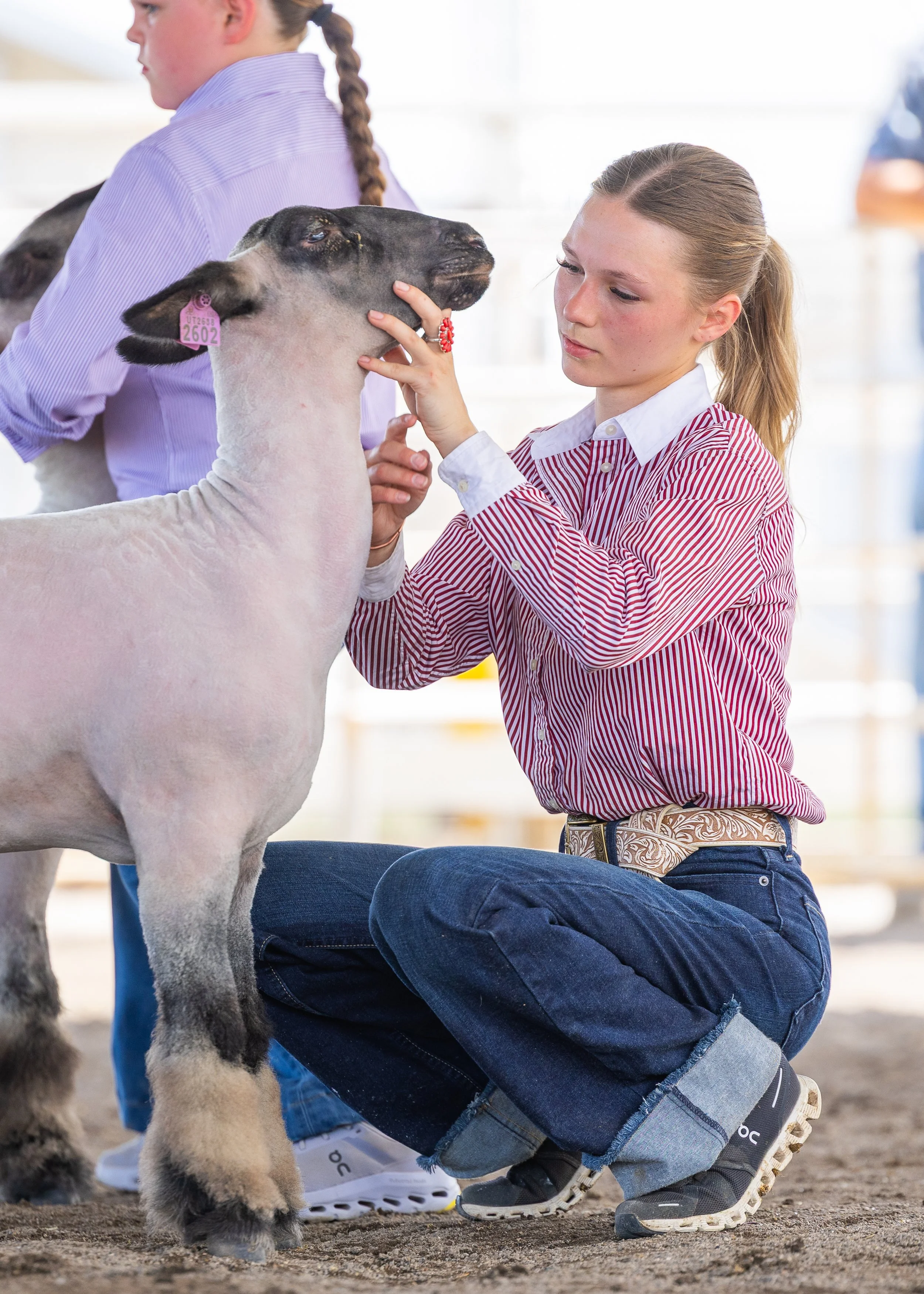
After your lamb has had time to adjust, begin working with it as soon as possible. Austin recommends removing the halter sooner rather than later and teaching lambs how to lead naturally. Many exhibitors rely on the halter for too long, making the transition to showmanship more difficult later.
Remember:
Stay beside the lamb rather than directly in front of it.
Let the lamb see where it's going.
Be patient.
Don't quit if the lamb gets away.
If a lamb escapes and runs back to the barn, catch it and continue working with it. Otherwise, the lamb learns that running away ends the lesson.
Essential Equipment for Beginners
You don't need every product in the show supply catalog to be successful.
A few basic items can get you started:
Halter
Slicker or wool card
Sheep stand
Feed and water buckets
Leg wraps
Blower (if available)
Don't be afraid to shop Facebook Marketplace, borrow equipment, or buy used items from older exhibitors who are graduating out of the project.
Set Realistic Goals
One of Austin's biggest pieces of advice was to focus on improvement rather than winning. There will always be someone with a more expensive lamb or more experience. Success doesn't happen overnight. For first-time exhibitors, one of the best goals is to focus on showmanship skills and learning how to care for your animal correctly. The banners and buckles can come later.